

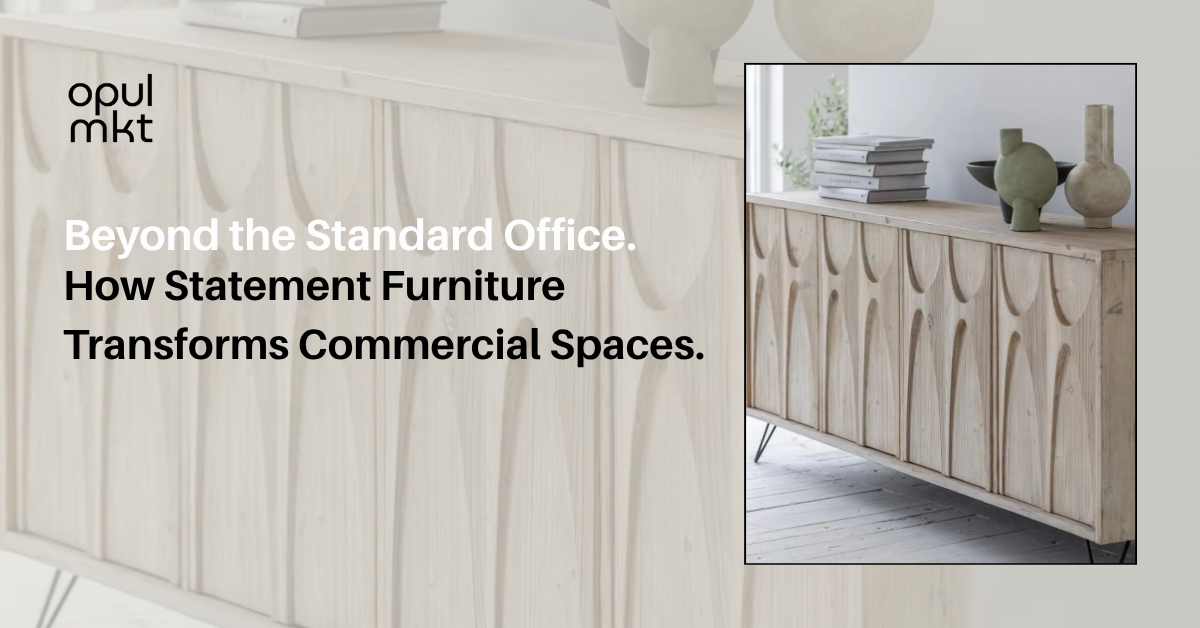
The dull office is not a neutral condition. It is a design failure with measurable consequences — for talent, for culture, and for every person who spends their working day inside it.
The office has always reflected the values of the organisation it houses. In 2025, neither the hierarchical mahogany office nor the egalitarian open-plan grid serves organisations competing for talent, managing hybrid workforces, and increasingly aware that the physical environment has measurable effects on productivity, creativity, and wellbeing. The office is now a design brief as demanding as any residential or hospitality project — and the furniture within it carries strategic weight.
The dull office is not a neutral condition. It is a design failure — and the cost is paid in reduced performance, lower engagement, and missed competitive advantage every single day.
Why Conventional Office Furniture
Fails the Modern Brief
![]()
Standard commercial furniture is optimised for the wrong things. It minimises cost, standardises specification, and simplifies procurement. What it does not do is produce environments that people want to spend time in, that communicate the organisation's values and design intelligence, or that support the diverse ways people actually work.
The evidence that physical environment affects work quality is now substantial. Research from the Global Wellness Institute has shown that organisations implementing considered workplace design see measurable reductions in absenteeism and improvements in job satisfaction. Studies on biophilic elements in office environments have demonstrated improved cognitive function, reduced stress markers, and increased creative output. The return on investment in office design is not an aesthetic argument — it is a business case.
The generic commercial office communicates something to everyone who enters it: that the organisation values efficiency over experience, standardisation over distinctiveness, and cost management over the people who use the space. This is rarely the message organisations intend to send — but it is the message received by every prospective employee, every client visitor, and every team member who spends their working day in it.
Statement office furniture is not furniture that shouts. It is furniture that has a design point of view — that communicates craft quality, material intelligence, and considered proportion in a way that standard commercial pieces do not. A sculptural lounge chair in a reception area. A conference table in solid hardwood that anchors the room. A pendant that defines the atmosphere of a breakout zone. These are the decisions that determine whether a space feels designed or merely furnished — and that difference is felt immediately by everyone who enters.
The Resimercial Shift —
When Offices Borrow from Home
![]()
The most significant trend in commercial interior design over the past five years is the adoption of residential design language in workplace environments. 'Resimercial' — the deliberate introduction of domestic comfort, material warmth, and personal scale into office environments — is now the standard of the most design-forward commercial interiors globally.
The driver is simple: people work more productively, more creatively, and for longer in environments that feel comfortable and human-scaled. The sterile, corporate office — characterised by hard surfaces, fluorescent lighting, and furniture designed for durability rather than experience — is incompatible with this understanding.
The result, when executed well, is an office that feels like a place people choose to be rather than a place they have to be. In hybrid work environments where the office must actively compete with the home for the time and attention of employees who have genuine choice about where they work, this distinction has direct commercial consequences.
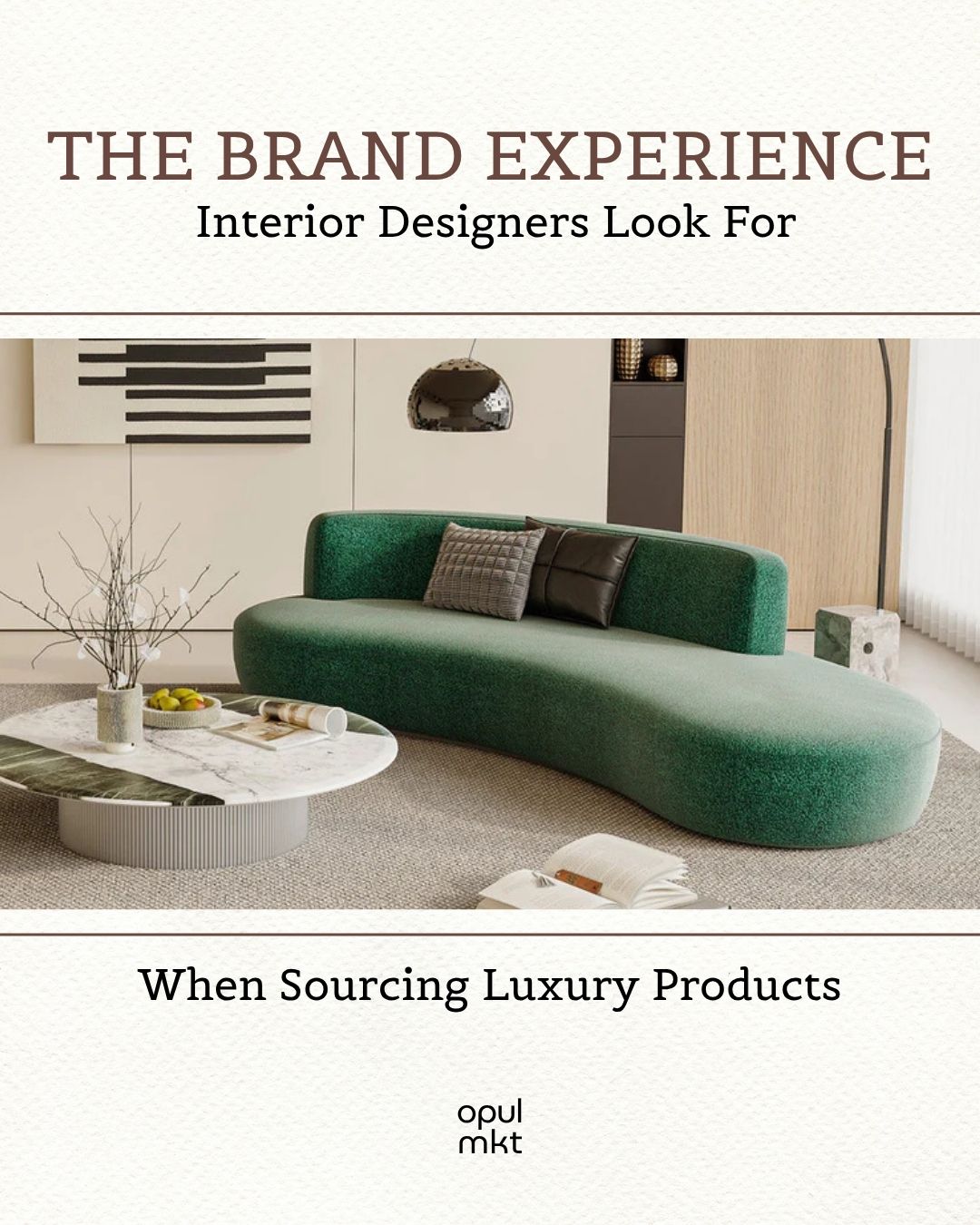
Residential-quality upholstered furniture, rugs, and lighting — specified with the material integrity that domestic environments demand — are available for commercial projects through the Opul Mkt furniture collection. Each piece is selected for its ability to bring genuine warmth and craft quality to commercial environments without sacrificing durability.
Key Zones &
the Furniture That Defines Them
A design-forward commercial interior is not one where every surface has been filled with statement pieces. It is one where the right design decisions have been made in the right zones — where furniture and objects placed in specific areas serve the purpose of that zone while contributing to the overall design identity of the organisation.
The reception area is the organisation's design statement made visible in three dimensions. It is the first and last space that clients, candidates, and visitors experience — and it sets the expectation for everything that follows. In a design-forward office, it communicates design intelligence, cultural confidence, and material quality that is legible before a word is spoken.
- —Hero artwork at dominant wall scale — original or limited edition, never reproduced; the cultural identity of the organisation made visible
- —Reception desk or console in solid hardwood or stone — a material that communicates quality rather than cost management
- —Lounge seating with genuine material depth — heavyweight linen, leather, or wool upholstery; not contract fabric on generic frames
- —Architectural lighting that creates atmosphere — a statement pendant or considered wall sconce, not a uniform ceiling grid
Original and limited-edition art for corporate reception areas at the scale commercial environments require — browse the Opul Mkt art collection →
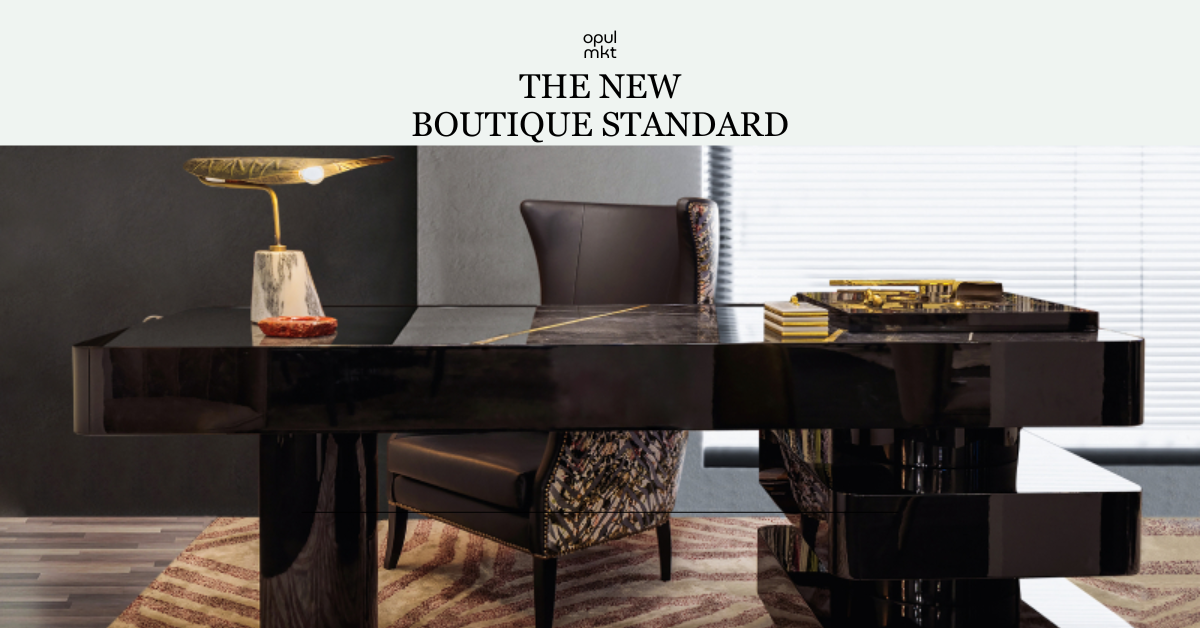
In 2025, the most compelling executive offices are not the ones that deploy the most expensive brands or the most ostentatious materials. They are the ones that communicate design intelligence through restraint — the quality of a single desk in solid hardwood with an honest finish, a lounge chair in natural leather that has developed patina, a rug that grounds the room with the warmth of a handwoven natural fibre piece.
- —Desk that communicates authority through material quality and proportion — solid hardwood or natural stone surface, honest finish, correct scale for the room rather than maximum size
- —Lounge chair or pair of chairs with genuine material depth — for informal meeting settings; natural leather or heavyweight upholstery with honest construction
- —A rug that grounds the room's scale — hand-knotted natural fibre; acoustic softening and material warmth simultaneously
- —Art chosen for personal resonance and design merit — not institutional legibility; the piece that means something specific to the person who works in this room
Handwoven rugs that anchor executive environments with natural fibre authority — explore the Opul Mkt rugs collection →
The conference room is where organisational decisions are made and where the organisation presents itself to external stakeholders. It is, paradoxically, one of the most under-designed spaces in most commercial environments — treated as a functional requirement rather than a design opportunity. A design-forward conference room communicates organisational quality in a setting where that quality is commercially significant.
- —Conference table in solid hardwood or natural stone — not laminate or veneer; walnut, oak, or ash with an honest oil finish that will age into character over a decade of use
- —Seating with genuine ergonomic quality and material dignity — not standardised task chairs; upholstery that holds up to daily use without the compromise of contract fabric
- —Acoustic treatment through soft furnishings — rugs, upholstered wall panels, and ceiling textile elements that solve the open reverberation problem conference rooms consistently suffer from
- —Statement lighting over the table — a pendant or series of pendants that define the table as a deliberate focal zone and create atmosphere rather than providing uniform lux
Statement lighting that defines conference table atmosphere — explore the Opul Mkt lighting collection →
Material Intelligence
in Commercial Environments
![]()
![]()
The commercial furniture market has historically defaulted to synthetic materials — laminates, engineered finishes, synthetic upholstery — on the grounds of durability and maintenance. The design cost of this default is enormous: synthetic materials look and feel like synthetic materials, and the gap between them and the natural alternatives is immediately apparent to anyone who engages with them.
The good news for designers specifying design-forward commercial interiors is that natural material alternatives perform better in commercial contexts than is often assumed. Solid hardwood with appropriate finish treatment ages into character in high-traffic environments — developing patina rather than degrading. Natural upholstery fabrics with appropriate specification meet commercial durability requirements while retaining the sensory quality synthetic alternatives cannot replicate.
Natural fibre textiles at Opul Mkt include pieces selected for both material depth and the acoustic performance characteristics that commercial specifiers require — browse textiles →
The Biophilic Office —
Nature as a Design Strategy
![]()
Biophilic design — the deliberate integration of natural elements into built environments — has moved from a design trend to an evidence-based design standard. The research base is now substantial: natural elements in office environments measurably reduce stress, improve cognitive function, increase creative output, and produce more positive assessments of the working environment by the people who use it.
For designers specifying commercial interiors, biophilic design is not an optional upgrade to a conventional specification. It is a fundamental component of any environment designed to support human performance.
- —Living walls and vertical gardens — natural growth directly in circulation areas; the most legible biophilic gesture and one of the highest-impact single interventions for perceived environmental quality
- —Natural materials throughout — solid timber, stone, clay, and natural textiles introduce tactile richness alongside visual warmth; a solid timber conference table is a biophilic element
- —Natural light maximisation — furniture placement and partition strategy that preserves sightlines to windows; the daylight that reaches a workstation determines its quality more than any other single variable
- —Plant arrangements that define zones — improve air quality and introduce the calming presence of living growth into otherwise static environments; acoustic and visual zone definition simultaneously
- —Nature-inspired art and textiles — organic patterns, landscape works, botanical forms that extend the biophilic palette beyond literal plant integration; the handwoven wool rug is a biophilic element
The most effective commercial biophilic designs are the ones that integrate natural elements seamlessly into the design language of the space rather than adding them as conspicuous gestures. A solid timber conference table is a biophilic element. A handwoven wool rug is a biophilic element. A pendant light in natural materials is a biophilic element. These are not specialist interventions — they are the design-forward alternatives to synthetic commercial furniture that already exist within the brief.
Brand Identity Through
Office Design
For organisations competing in markets where design quality, cultural sophistication, and creative credibility are commercial differentiators, the office environment is a brand expression. It communicates to every employee, client, and candidate who enters it something about how the organisation sees itself and what it values.
Generic commercial furniture communicates generic commercial values. Design-forward, materially rich, carefully curated office environments communicate design intelligence, cultural confidence, and a level of investment in the people who work there that is immediately legible to anyone who enters.
An agency whose client meeting room has a solid hardwood table, a handwoven rug, a considered artwork, and lighting that creates genuine atmosphere is communicating design confidence in the same language it uses for its client work — before a single word of the pitch has been spoken.
As hybrid work has become established, organisations have recognised that the office must compete with the home as a working environment. The response in the most forward-thinking organisations has been to design offices as destinations rather than obligations — spaces that offer something the home cannot, and that employees actively choose to come to rather than being required to.
This destination quality is achieved through design: the café that feels like a genuinely well-designed independent coffee shop; the breakout lounge with furniture and lighting that creates the atmosphere of a member's club; the meeting room that clients remark on before the presentation begins. These are the environments that win the competition with the home office for discretionary attendance.
Sourcing Statement Office Furniture —
The Opul Mkt Approach
Sourcing design-forward furniture for commercial and executive environments presents a specific challenge that standard commercial procurement channels are not built to address. Standard commercial furniture suppliers optimise for standardisation, volume, and durability — the three things that produce the generic office environments this brief is trying to escape.
Design-forward commercial sourcing requires access to a different category of maker: artisan furniture studios working in solid hardwoods with honest finishes; textile makers whose natural fibre pieces meet commercial performance standards without sacrificing sensory quality; lighting designers whose work creates atmosphere at commercial scale; artists and object makers whose work gives commercial spaces the personality and cultural identity that purely functional furniture cannot provide.
- —Material depth confirmed at specification — solid hardwood, natural stone, honest metal finishes documented per piece; not photographic representation of engineered alternatives
- —Commercial durability ratings alongside natural material quality — Martindale ratings for upholstery, surface sealing options for stone, finish treatment options for timber; the information needed to specify natural materials with commercial confidence
- —Lead times reliable enough for commercial project programmes — confirmed at order, not aspirational; commercial project timelines have no tolerance for the supply chain optimism that residential projects can sometimes absorb
- —Customisation capability for dimensional and finish requirements — commercial spaces have specific dimensional requirements; the ability to adjust scale, finish, or material to meet the brief without rebuilding the specification from scratch
- —Sample dispatch before commitment — commercial specifications at statement level require material and finish assessment under the actual light conditions of the space; not showroom or product photograph assessment
Every day in a generic office
is a cost paid in performance.
Opul Mkt curates makers whose work meets the commercial and executive brief at the material level — documented for specification, available for commercial project timelines, selected for the design intelligence that standard channels cannot deliver. Explore the full collection by category.
Save This. Share It. Use It on Your Next Commercial Project.
Save for future commercial, executive, and workplace design project planning · Share with clients considering an office refurbishment or new commercial fit-out · Share with studio teams briefing statement furniture for commercial environments.


Leave a comment
This site is protected by hCaptcha and the hCaptcha Privacy Policy and Terms of Service apply.