
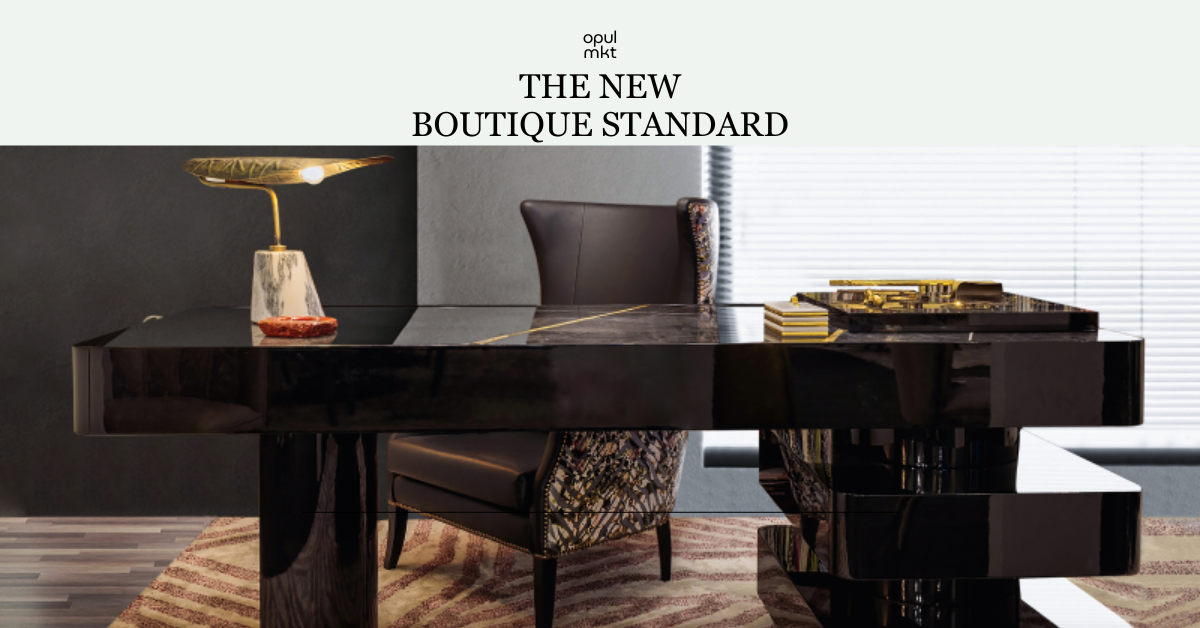
8 Boutique Hotel Room Design Trends Shaping Hospitality in 2026
The boutique hotel has always operated on a different logic from the chain. Where large-scale hospitality competes on consistency, the boutique competes on distinctiveness. The guest is not paying for a guaranteed experience. They are paying for a specific one — a room in a specific place, with a specific character, that could not exist anywhere else. That promise is made and kept entirely through design.
In 2025, with guests more design-literate, more discerning, and more willing to share both praise and disappointment, the design standard required to deliver on the boutique promise has risen significantly. This guide covers the trends currently shaping boutique hotel room design and explains where Opul Mkt's curated sourcing network fits into each one.
"The narrative of the property, the material quality of the room, the art on the walls, the feel of the textiles, the quality of the light — these determine whether a boutique hotel produces the experience it promised."
Trend 01 Narrative-Led Design — The Property as a Story
 The most significant shift in boutique hotel design over the past five years is not aesthetic — it is philosophical. The question has moved from what should this room look like? to what story should this room tell? Guests in 2026 are not looking for beautiful interiors. They are looking for specific interiors — places that feel irreplaceable because they are genuinely rooted in something: a location, a history, a material culture, a point of view.
This shift has practical consequences for every design decision in the room. Colour palettes drawn from local landscapes rather than trend boards. Materials sourced from regional craft traditions rather than standard trade catalogues. Art and objects that reference the specific cultural context of the property rather than generic hospitality décor.
The result — when executed well — is an interior that could only exist in this specific place. Guests register this quality even when they cannot articulate it. It is why some boutique hotels become destinations in themselves, generating the kind of loyalty and word-of-mouth recommendation that no marketing budget can replicate.
What This Means for Sourcing
Narrative-led design is also a sourcing challenge. Finding furniture, art, textiles, and objects that contribute to a specific narrative — rather than simply filling a room with attractive items — requires access to makers who understand the design intention and can work within it. Generic trade catalogues do not support this approach. Curated networks of global makers and artisan studios do.
- Art commissions from artists connected to the property's location or cultural context
- Furniture from makers who work in materials native to the destination — local hardwoods, regional stone, traditional textile techniques
- Objects and accessories that function as narrative elements rather than decorative filler
- Custom specification options that allow standard pieces to be adapted to the room's specific colour and material language
Sourcing at Opul Mkt
For designers developing a narrative-led brief, Opul Mkt's curated art collection includes original works and commissions from independent artists and studios across multiple cultural contexts — pieces that can anchor a room's narrative rather than simply occupy a wall.
Trend 02 Material Richness and Textural Depth
The era of stark minimalism in boutique hotel design is over. What has replaced it is not its opposite — maximalism for its own sake — but something more considered: richly layered interiors where depth is achieved through the quality and variety of materials rather than through visual abundance.
In 2026, boutique hotel rooms that perform at the highest level are built on a textural foundation: silks, velvets, wools, and linens layered across furniture and accessories; natural stone with bold veining and rich natural variation; solid hardwoods with honest finishes that develop character over time; handwoven rugs that provide acoustic softness and tactile warmth simultaneously. These are materials that engage the senses in ways that visual design alone cannot.
The Colour Dimension
Material richness in 2026 is paired with a colour palette that has moved decisively away from safe neutrals. Jewel-toned accents — deep greens, rich golds, warm purples, earthy oranges — are introduced against warm neutral base palettes to create interiors that feel both sophisticated and genuinely welcoming. This is not maximalism; it is colour used with intention, in materials with genuine depth, to create rooms that feel layered and considered rather than flat and safe.
Sourcing at Opul Mkt
Explore handwoven rugs at Opul Mkt — natural fibre pieces from artisan makers that introduce the textural foundation every well-designed room requires.
For upholstered furniture with genuine material depth, browse the Opul Mkt furniture collection for pieces specified with the material integrity that boutique hotel design demands.
Trend 03 Curated Art and the Signature Design Moment
Art has always been part of boutique hotel identity. What has changed in 2026 is the standard expected of it. Generic prints, reproduced art, and undifferentiated framed photography are no longer sufficient — not because guests can always identify the difference, but because they can always feel it. A room with genuinely curated, specifically chosen art produces a different quality of experience from a room decorated with art-adjacent products, and guests respond to that difference.
The most effective boutique hotel art strategies share a consistent approach: a small number of well-chosen, well-scaled pieces given genuine prominence, rather than a large number of smaller pieces that collectively read as wallpaper. A single statement work above the bed, scaled to the wall and lit with intention, communicates more about the property's design commitment than any quantity of smaller pieces combined.
Signature Design Moments
Beyond art, the signature design moment in a boutique hotel room can be delivered through any sufficiently distinctive element: a statement headboard that anchors the room's entire visual identity, a hand-applied wall finish that cannot be replicated at another property, an extraordinary piece of furniture that holds the room together, or a lighting fixture that defines the room's atmosphere.
These signature elements serve a specific commercial purpose beyond their design function: they are the details that guests photograph, describe in reviews, and use to recommend the property to others. In the age of social media, a genuinely distinctive room detail has marketing value that no campaign can replicate.
Sourcing at Opul Mkt
Explore statement beds and headboards at Opul Mkt — in natural wood, custom upholstery, and bespoke fabrication — for pieces that anchor a room's identity with genuine material authority.
For lighting that defines atmosphere rather than simply providing illumination, explore statement lighting at Opul Mkt — fixtures designed for residential warmth at commercial scale.
Original artworks and limited edition prints that function as genuine design anchors are available through Opul Mkt's curated art collection — scaled and positioned for the wall proportions of boutique hotel rooms.
Trend 04 Bold Color, Pattern, and the Expressive Interior
 Boutique hotel design in 2026 has embraced expressive, personality-driven interiors with a confidence that was less common in the previous decade's preference for safe neutrals and quiet luxury. Vibrant wall coverings, statement murals, bold textile patterns, and layered colour are all appearing in properties that understand their guest profile and design with genuine conviction.
The boutique hotels executing this approach most successfully are the ones where the bold design choices are legible as expressions of the property's specific character and location — where the colours and patterns connect to something, rather than simply announcing visual ambition.
Murals and Collaborative Art
Mural commissions from local artists have become one of the most powerful design tools available to boutique properties. A well-executed mural connects the property to its location in a way that no other design element can — it is irreplaceable, unmistakable, and generates the kind of shareable visual content that sustains a property's social media presence without ongoing investment. The key is the selection and briefing of the artist: a mural that reflects the property's narrative functions as a design anchor and a brand statement simultaneously.
Pattern and Textile Boldness
In rooms where the wall treatment is restrained, pattern can be introduced through textiles — bedding, cushions, throws, curtains — without the permanence or cost of architectural intervention. This is a flexible strategy that allows boutique properties to refresh and update their visual identity without structural changes.
Sourcing at Opul Mkt
For decorative objects and curated accents that introduce pattern and material character without overwhelming a room's palette, explore Opul Mkt's décor collection — pieces selected to add the finishing layer of personality that transforms a well-designed room into a memorable one.
Trend 05 Smart Space Utilization and the Residential Approach
Boutique hotels frequently occupy buildings that were not designed as hotels — converted townhouses, historic commercial properties, repurposed industrial buildings. The rooms in these properties are often smaller, more irregularly shaped, and more architecturally specific than those in purpose-built hospitality developments. This constraint is also an opportunity: rooms with genuine architectural character, handled with design intelligence, produce more memorable experiences than standard rectangular hotel rooms of twice the size.
The Residential Influence
The strongest current in boutique hotel room design is the residential approach: rooms that feel like someone genuinely lives in them, designed with the warmth and specificity of a private home rather than the standardization of a commercial property. Distinct zones for sleeping, lounging, and working. Domestic-scale furniture that feels chosen rather than specified. Layered textiles that add warmth and acoustic softness. Objects that feel personal rather than procured.
This approach produces the experience that boutique hotel guests consistently identify as most valuable: the feeling of genuine hospitality rather than managed service.
Furniture That Serves Multiple Functions
In smaller boutique rooms, furniture that serves multiple purposes without announcing its multifunctionality is essential. A bench at the foot of the bed that serves as luggage placement, seating, and a design anchor. A desk that functions as a dressing table. A bedside table with storage that accommodates the accumulated possessions of a multi-night stay without cluttering the surface.
Sourcing at Opul Mkt
Browse the Opul Mkt furniture collection for pieces designed with the material quality and proportional intelligence that small, character-rich hotel rooms demand. Every piece should earn its place through both function and design.
Trend 06 Sustainability and Local Sourcing as Design Principles
Sustainability in boutique hotel design has moved beyond compliance and greenwashing. In 2026, the most credible approach integrates environmental responsibility directly into the design language — using locally sourced materials that reduce transport impact and connect the property to its context, specifying natural materials that age gracefully rather than degrading, and working with local craftspeople and artisans whose production processes support rather than deplete the community the property inhabits.
This approach is not a sacrifice of design quality. The materials that best express a sense of place — local stone, regional hardwoods, traditional textile techniques — are often also the materials with the lowest environmental impact and the highest long-term performance.
Reclaimed and Repurposed Materials
In renovation and repositioning projects — which represent a significant proportion of the boutique hotel market — reclaimed and repurposed materials are both a sustainability strategy and a design opportunity. Original floorboards, salvaged timber, reclaimed stone, and vintage furniture pieces all carry the kind of accumulated history that new materials cannot replicate. Used with intelligence, they add exactly the depth and specificity that distinguishes a genuine boutique property from a new-build imitating the aesthetic.
Local Artisan Collaboration
Collaborating with local artisans — for furniture, textiles, ceramics, and metalwork — serves the sustainability brief while simultaneously producing the design specificity that is central to boutique hotel identity. A piece of furniture made by a craftsperson in the same city as the hotel carries a quality of place that no imported product can replicate, regardless of its objective design merit. This is where curated global maker networks that include regional specialists provide genuine value.
Trend 07 Communal Spaces and the Social Identity of the Property
The boutique hotel's competitive advantage over the chain is not just the quality of the individual room — it is the quality of the entire property as a social environment. Lobbies, bars, communal lounges, rooftop spaces, and shared courtyards are where a boutique property communicates its identity to guests and to the wider community it serves.
In 2025, the most successful boutique properties are the ones where these communal spaces feel as considered as the guest rooms — where the lobby is a destination in itself, where the bar reflects the property's personality with the same specificity as the rooms, and where the communal spaces are used by local residents as well as guests.
The Lobby as Design Statement
The lobby is the first and last impression the property makes. In boutique hotel design, it carries more design investment per square foot than almost any other area — because its job is to communicate the property's entire identity in the first thirty seconds of a guest's experience.
Communal lobbies in 2026 are increasingly designed as lifestyle destinations: comfortable seating zones with domestic-scale furniture arrangements, curated beverage stations, art and objects that tell the property's story, and lighting that creates genuine atmosphere rather than simply illuminating a circulation space.
Sourcing at Opul Mkt
Statement mirrors, sculptural lighting, and curated art are the tools that transform a lobby from a functional space into a design destination. Explore statement mirrors at Opul Mkt for pieces that introduce depth and visual drama in communal spaces.
Trend 08 Wellness Integration — Design That Supports Recovery
 Wellness has moved from being an amenity category — spa facilities, fitness rooms, pool access — to being a design philosophy that informs every space in a high-performing boutique property. Guest rooms in 2026 are increasingly designed with explicit attention to sleep quality, sensory calm, and physical restoration — not just aesthetic appeal.
This shift has practical design implications: circadian lighting systems that support natural sleep rhythms; blackout capabilities that deliver genuine darkness; acoustic materials that reduce ambient noise; air quality systems designed into the room's material specification; natural materials that regulate temperature and humidity.
Biophilic Design as a Wellness Tool
Biophilic design — the deliberate integration of natural elements into the built environment — has moved from a design trend to a guest expectation in boutique hospitality. Living walls, potted plants, natural stone, abundant natural light, and nature-inspired art and textiles all contribute to the quality of restoration that guests increasingly seek.
The evidence base for biophilic design in hospitality is now substantial: natural materials and views of nature measurably reduce stress markers, improve sleep quality, and produce more positive assessments of the overall guest experience. Designing for wellness is not a soft benefit — it is a measurable competitive advantage.
Materials That Support Wellness
- Natural fibre textiles — linen, wool, cotton — that regulate temperature and breathe
- Natural stone and ceramic surfaces that are cool to the touch and free of synthetic off-gassing
- Solid wood with natural oil finishes rather than sealed polyurethane surfaces
- Warm-toned, low-intensity lighting that supports circadian rhythms rather than disrupting them
- Acoustic rugs and soft furnishings that reduce the ambient noise that disrupts sleep
Sourcing at Opul Mkt
For designers specifying with wellness in mind, natural material textiles at Opul Mkt include linen, wool, and natural fibre pieces selected for both sensory quality and the physiological benefits of natural material specification.
Where Opul Mkt Fits in Boutique Hotel Design
Every trend identified in this guide has a common sourcing requirement: access to makers who understand both the design intention and the commercial performance standard that boutique hotel specification demands. Natural materials that meet hospitality durability requirements. Artisan-made pieces available at project scale. Custom specification without compromising quality or timeline.
Standard hospitality trade channels are not built for this brief. They optimise for consistency, volume, and standardization — not for the material authenticity, narrative specificity, and design character that boutique hotel design requires. Opul Mkt is built for exactly this intersection.
Boutique hotel design is the most demanding brief in hospitality — because the promise it makes to guests is the most specific. Every material, every object, every fixture is either earning its place in the room's narrative or undermining it. Opul Mkt curates the makers whose work earns its place.
Ready to Source for Your Next Hospitality Project?
Save this guide for future boutique hotel and hospitality project planning.
Share with clients briefing a boutique property refresh or new development.
Share with studio teams developing a narrative-led hospitality brief.


Leave a comment
This site is protected by hCaptcha and the hCaptcha Privacy Policy and Terms of Service apply.