
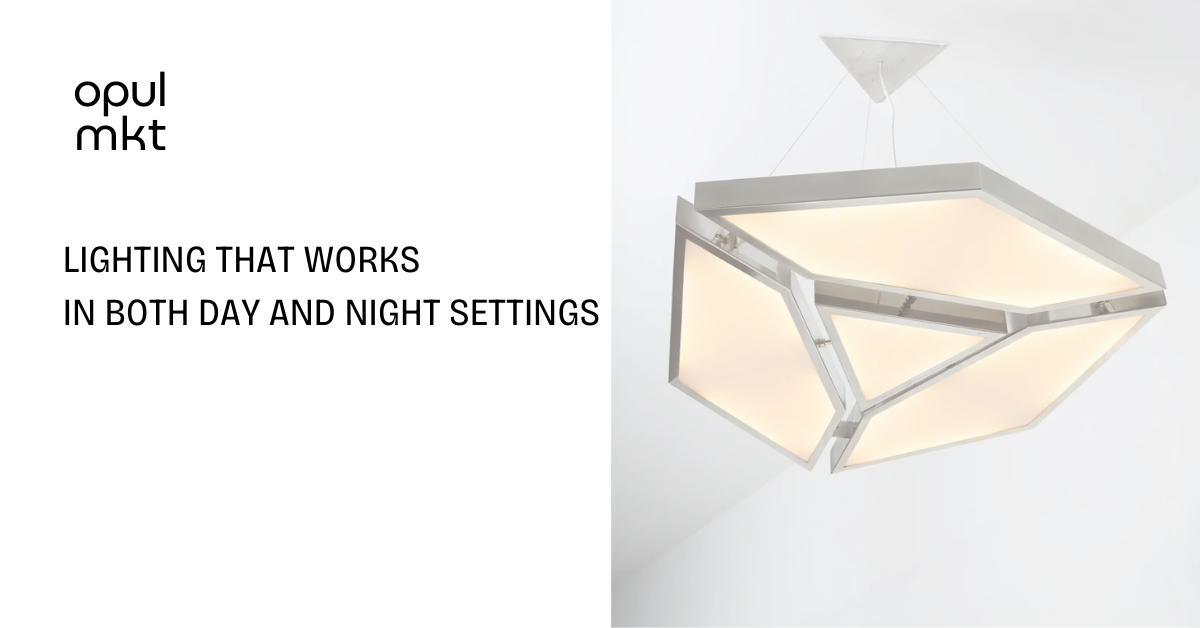
Most rooms are lit for one condition. Bright in the day because the windows do the work, flat at night because the only overhead fixture was never meant to carry the room alone. The rooms that genuinely work at every hour are designed with both conditions in mind from the beginning.
"Good lighting is not about brightness. It is about having the right quality of light, at the right intensity, for the right moment."
Part I: Understanding the Day-to-Night Lighting Challenge
 Natural light is a dynamic resource. Cool and directional in the morning, warm and diffuse at midday, golden and low-angled in the late afternoon, and absent by evening. A room that relies on natural light for its daytime character will feel fundamentally different — often flat, overlit, or atmospherically empty — once that light is gone.
The challenge is not simply replacing natural light with artificial alternatives after dark. It is designing an artificial lighting plan that produces the same qualities that make natural light compelling — warmth, directionality, variation in intensity, the play of shadow and highlight — while also supporting the functional requirements of a room used for reading, eating, working, or relaxing.
Why Most Lighting Plans Fail at Night
- Single overhead sources that produce even, flat illumination with no depth or shadow
- Cool-toned LEDs that read as clinical rather than residential — activating rather than relaxing
- No dimmability — rooms that can only be fully bright or switched off, with no in-between
- No layering — ambient light without any accent or task sources to create zones and visual interest
- Fixtures chosen for daytime visual appeal that produce poor-quality light in the evening
The Core Principle: Layered Lighting
Every well-lit room — whether residential, hospitality, or commercial — is built on the same foundation: layered lighting. Three distinct types of light, each serving a different purpose, designed to work together and to be adjusted independently as the day progresses.
General illumination that fills the room. The daytime workhorse and evening foundation — ceiling fixtures, recessed lights, natural light.
Directed illumination for specific activities — reading, cooking, dressing, working. Table lamps, floor lamps, sconces, under-cabinet lights.
Light that creates atmosphere and highlights specific elements — artwork, architectural features, surfaces. Sconces, picture lights, and carefully placed floor lamps do this work.
The day-to-night transition is managed by shifting the balance between these layers. Daytime: ambient leads, supported by natural light. Evening: ambient dims, task and accent sources carry the room — creating pools of warmth rather than uniform brightness.
Part II: The Four Lighting Types — What Each Does and When
1. Ambient Lighting — The Foundation Layer
Ambient lighting is the general illumination that makes a room functional. In the evening, it is the layer most in need of control — because it is the one most likely to produce the flat, institutional quality that destroys residential atmosphere. The single most important intervention in any residential lighting plan is putting ambient sources on dimmers. A chandelier at 100% produces a social, active environment. The same fixture at 30% produces an intimate, atmospheric one.
Key ambient fixture types: chandeliers and statement pendants; recessed downlights (always warm-toned, always dimmable); semi-flush ceiling fixtures for lower ceilings.
Statement chandeliers and pendants at Opul Mkt serve as both daytime design objects and evening ambient sources — fixtures in natural materials that produce warm, atmospheric light rather than clinical brightness.
2. Task Lighting — The Functional Layer
Task lighting serves specific activities and should be independently controllable from the room's ambient sources. It is the layer most underinvested in residential lighting plans — designers focus on statement fixtures and underspecify the task sources that make the room actually functional. The result is a room that looks beautiful in photographs but requires turning on all the lights to do anything practical.
Key task fixture types: table lamps at shoulder height; floor lamps beside seating; wall sconces for bedside reading; under-cabinet lighting in kitchens.
Table lamps at Opul Mkt — in natural stone bases, ceramic, and aged metals — look as good in daylight as they do at night.
For floor lamps that anchor reading corners with both task light and sculptural presence, explore Opul Mkt's floor lamp collection.
3. Accent Lighting — The Atmosphere Layer
Accent lighting does not illuminate a room — it animates it. A picture light above an artwork. A sconce beside a fireplace. A floor lamp angled toward a textured wall. These sources create the visual interest, shadow, and warmth that make a room feel genuinely designed rather than merely furnished. As the evening progresses and ambient light diminishes, accent sources become the primary contributors to the room's character.
Key accent fixture types: wall sconces flanking artwork or architectural features; picture lights; directional floor lamps; integrated shelf and niche lighting.
Sculptural wall sconces at Opul Mkt serve as design objects in daylight and atmosphere creators in the evening — natural materials, warm tones, and proportions designed for residential scale.
4. Natural Light — The Daytime Foundation
Natural light has the most influence over a room's daytime character — and its absence most requires compensation. Maximising it through furniture placement, reflective surfaces, and window treatment choices is the highest-leverage daytime intervention available.
- Position mirrors to reflect and amplify natural light — particularly on walls perpendicular to windows
- Choose lighter floor treatments or rugs in rooms with limited natural light to bounce what exists upward
- Use sheer window treatments that diffuse rather than block natural light
- Avoid placing large furniture pieces in front of windows or in paths that block light penetration
Part III: Room-by-Room Lighting — Day and Night
Living Room
The living room is where day-to-night lighting transition is most demanding — because the room is used for the widest range of activities across the full span of the day: morning coffee, afternoon reading, evening conversation, late-night film watching. Each activity has different lighting requirements, and the room must support all of them without a complete reconfiguration.
Daytime
Maximise natural light as the primary ambient source. Supplement with a statement pendant or chandelier on a dimmer as background fill. Bring in task sources — floor lamp beside the sofa, table lamp at the desk end — independently controlled.
Evening
Dim ambient to 20–40% and let accent and task layers carry the room. A floor lamp at reading height, a table lamp on the console, a sconce illuminating artwork above the fireplace. Warm, inhabited, dimensionally interesting.
Opul Mkt Picks — Living Room
-
Statement Pendant / Chandelier Ambient — always on a dimmer
The centrepiece of the ceiling plane. Choose a fixture in natural materials — rattan, blown glass, forged metal — that reads as a design object in daylight and produces warm, diffuse light in the evening. Size generously: the most common mistake is a pendant that is too small for the ceiling height. Explore chandeliers and pendants →
-
Arc or Tripod Floor Lamp Task and accent — beside seating
Positioned next to the primary reading chair or at the end of the sofa, a well-chosen floor lamp brings light to the human scale of a seated person. Look for a shade that directs light downward for task use. Explore floor lamps →
-
Pair of Table Lamps Task and symmetry — on console or credenza
Matching table lamps create visual symmetry and bring light to eye level in the evening. Natural stone bases, ceramic, or aged metal — materials that hold their integrity in daylight when the lamp is off. Explore table lamps →
-
Wall Sconces Accent — flanking fireplace or artwork
Sconces beside a fireplace or framing a large artwork create the evening focal point that transforms a well-furnished room into a considered one. Choose fixtures whose own form is worth looking at — they are present all day before they are ever switched on. Explore wall sconces →
Bedroom
The bedroom has the most clearly defined day-to-night requirement of any room: bright and functional for getting dressed and morning preparation, warm and dim for winding down and sleep. The failure mode is a bedroom with only a central ceiling fixture that must do all of this work alone.
Daytime
Natural light as the primary source, supplemented by a central fixture on a dimmer for overcast mornings. A well-positioned mirror amplifies natural light significantly. Wardrobe areas need dedicated task light for accurate colour rendering.
Evening
The bedside is where bedroom lighting matters most. Independently controlled bedside lamps or sconces at shoulder height, capable of focused reading light without illuminating the whole room. Overhead ambient dims to near-zero.
Opul Mkt Picks — Bedroom
-
Bedside Table Lamps (pair) Task — reading and evening atmosphere
The most consistently used fixtures in the bedroom. Invest here. A lamp that provides genuinely directional reading light at the correct height — roughly level with the top of the headboard when seated — with a shade that allows light to escape downward rather than casting it broadly. Explore table lamps →
-
Bedside Wall Sconces Task — alternative to table lamps, keeps surfaces clear
Wall-mounted reading lights eliminate the table lamp from the bedside equation, freeing surface space. Swing-arm or adjustable sconces allow directional control. Positioned at approximately 60 inches from the floor for most bed heights. Explore wall sconces →
-
Statement Pendant / Chandelier Ambient — always on a dimmer
On a dimmer, a bedroom chandelier serves the morning ambient function and creates the evening focal point when reduced to 15–20%. Smoke glass, woven rattan, aged brass — materials that read as a considered design object by day and disappear into atmospheric warmth at night. Explore chandeliers →
Kitchen
The kitchen has the most demanding lighting brief of any room — it must simultaneously serve precise task requirements and social and atmospheric functions, particularly in open-plan layouts where the kitchen is visible from the dining and living zones.
Daytime
Natural light maximisation is the priority. Supplement with undercabinet task lighting on a separate circuit from overhead sources to keep work surfaces uniformly illuminated regardless of ambient conditions.
Evening
Island pendants become the visual focal point. Ambient ceiling sources dim to background level; the island pendants and undercabinet task lights carry the functional brief; the space transitions from a working kitchen to a social one.
Opul Mkt Picks — Kitchen
-
Island Pendants (pair or trio) Task and statement — over the island
The most visible fixture in most kitchen environments. Choose a pendant that is worth looking at when unlit — rattan, blown glass, natural stone, or sculptural metal — and that produces warm, downward-directed light when switched on. Space evenly with centres approximately 24 inches apart. Explore pendant lights →
-
Dining Table Pendant or Chandelier Ambient and atmosphere — always on a dimmer
In open-plan layouts, the dining table fixture bridges kitchen and living zones. It should be distinct from the island pendants in form while sharing a tonal language. Hung 30–34 inches above the table surface for standard ceiling heights. Explore dining pendants →
Dining Room
The dining room is where evening lighting matters most. It is a room primarily used at night, under artificial light, for social occasions that benefit from warmth, intimacy, and the kind of flattering illumination that makes food look appealing and people look their best. A single pendant on a dimmer, hung at the right height with a warm-toned bulb, can produce all of this — if supplemented with at least one secondary source.
Opul Mkt Picks — Dining Room
-
Statement Dining Pendant or Chandelier Primary ambient — always on a dimmer
The dining room fixture must justify the visual attention it receives when unlit during the day, and produce genuinely warm, flattering light at dinner. Natural materials and warm-toned glass are the safest choices — avoid any fixture that produces cool or diffuse light rather than directional warmth. Hung 30–34 inches above the table. Explore dining chandeliers →
-
Sideboard Table Lamp or Pair of Sconces Accent and secondary ambient
Secondary sources are what give the dining room its depth in the evening. A sideboard lamp or a pair of wall sconces flanking a mirror or artwork prevent the single overhead fixture from doing all the atmospheric work alone.
Part IV: The Technical Decisions That Make It Work
Colour Temperature — The Most Important Technical Choice
Colour temperature is measured in Kelvin and describes the warmth or coolness of a light source. This is the single technical decision with the greatest impact on how a room feels at night, and the one most frequently specified incorrectly.
| Temperature | Description | Best Use |
|---|---|---|
| 2700K ✓ | Warm white | Living rooms, bedrooms, dining rooms. The residential standard — golden-toned, domestic, restorative. |
| 3000K | Soft white | Kitchens and bathrooms where slightly more clarity is useful. Still warm enough for residential use. |
| 4000K+ | Cool white / daylight | Task-specific commercial environments, studios, bathrooms with clinical requirements. Not appropriate for living spaces at night. |
The most common residential lighting mistake is specifying 3000K or 4000K bulbs throughout a home because they look clean in the daylight condition — and then wondering why the room feels wrong at night.  Always specify 2700K for living areas, bedrooms, and dining rooms.
Dimmers — Non-Negotiable
If there is a single investment in a residential lighting plan that generates the highest return on quality of experience, it is dimmers on every ambient circuit. A chandelier at full brightness produces one environment. The same fixture at 20% produces an entirely different one. Without a dimmer, you cannot access the evening quality of light that makes a room genuinely atmospheric.
Not all fixtures are dimmable with all dimmer switches — check compatibility before specifying. LED bulbs require LED-compatible dimmers. Specify dimmability as a requirement at the fixture selection stage, not as an afterthought.
Scale and Proportion — Getting the Size Right
The most common sizing error in residential lighting is underscaling — choosing a pendant or chandelier too small for the room. Use these rules as a starting point:
- Room chandeliers: add the room's length and width in feet; translate that number to inches for the fixture's diameter (a 12 × 15 room suits a 27-inch diameter fixture)
- Dining pendants: fixture diameter should be roughly half the width of the table
- Kitchen island pendants: hang so the bottom of the shade is 30–36 inches above the counter
- Bedside lamps: the bottom of the shade should be at approximately eye level when seated in bed
Part V: Creating Lighting Moments — Beyond the Functional Brief
Good lighting plans meet the functional brief. Great lighting plans go further — creating specific moments of visual interest, intimacy, and designed atmosphere that make a room memorable rather than merely well-lit.
Light as a Design Tool
Light a piece of artwork with a picture light and it becomes a focal point that defines the room's cultural identity. Direct a floor lamp at a textured wall and the wall's material depth — plaster, limewash, stone — becomes visible in a way that flat illumination never reveals. Place a table lamp at the end of a long console and create a terminus that draws the eye through the room. These are the decisions that separate designed lighting from adequate lighting.
Symmetry and Intentional Asymmetry
Matching table lamps create visual balance and communicate considered design. Asymmetrical lamps — one table lamp balanced by a floor lamp or a vase — create a more personal, collected quality. Both approaches work; what does not work is unintentional asymmetry. Balance a single lamp with a vignette on the opposite side. The lamp is part of a composed surface, not an isolated fixture.
The Accent Moment — Lighting Art and Architecture
One of the highest-leverage accents in any residential space is lighting a piece of art or a significant architectural feature. A picture light positioned 2–3 inches above the top edge of a canvas, angled at approximately 30 degrees, illuminates the artwork cleanly and creates a focal point that anchors the room at eye level. Sconces flanking a fireplace or architectural niche create the kind of evening atmosphere that no overhead source can replicate.
For picture lights, accent sconces, and statement lighting pieces that create these defining moments, explore the full Opul Mkt lighting collection — curated globally for material quality, warm light output, and residential design integrity.
Part VI: Common Lighting Mistakes — and How to Avoid Them
-
Single Source Syndrome
A room lit by one source — however beautiful — cannot transition from day to night effectively. The single pendant that looks spectacular at dinner looks institutional when you are trying to read, and looks nothing at all during the day when it is off. Layer always.
-
Hanging Fixtures at the Wrong Height
A pendant hung too low creates a physical obstacle. Too high, and it loses its connection to the surface it is meant to illuminate. The 30–34 inch rule for dining pendants, 7-foot clearance for stairways, shoulder-height rule for bedside lamps — these are established through the functional requirements of the people using the space.
-
Buying for Aesthetics Without Considering Light Quality
A beautiful fixture that produces poor light — too diffuse, too cool, too bright, too dim — is a design problem, not a design solution. Before specifying any fixture, determine what quality of light it produces, in what direction, at what colour temperature, and at what intensity range.
-
Neglecting the Off State
Every lighting fixture is present during the day, switched off, as a physical object. A bedside lamp with a cheap plastic base is there in the morning, in full natural light, being assessed as a design object even when it is not lit. Choose fixtures that earn their place in the room when they are not switched on. The light is the function. The fixture is the design.
-
Forgetting the Dimmer
Install a dimmer on every ambient circuit. Do it before the room is finished. The cost is minimal; the impact on the quality of the evening environment is transformative.
Lighting from Opul Mkt — Curated for Day and Night
Every lighting fixture in the Opul Mkt collection is selected for the qualities that determine whether a space works at every hour: material depth that reads well in daylight when the fixture is off, warm light output that produces residential atmosphere in the evening, and proportional intelligence that suits the rooms designers are actually working in.
Our global maker network includes lighting studios working in rattan, blown glass, natural stone, aged metals, and hand-formed ceramics — materials that create fixtures with genuine design authority and the light quality that luxury residential and hospitality environments demand.
Lighting is the one design decision that determines how every other decision in a room is experienced. The furniture, the art, the rugs, the textiles — all of them are seen through the quality of the light. Get the lighting right, and the rest of the room rewards it.
Ready to Specify Your Lighting Plan?
Save this guide for lighting planning on future residential or hospitality projects.
Share with clients who want to understand why their evenings feel flat.
Share with studio teams building room-by-room lighting specifications.


Leave a comment
This site is protected by hCaptcha and the hCaptcha Privacy Policy and Terms of Service apply.