

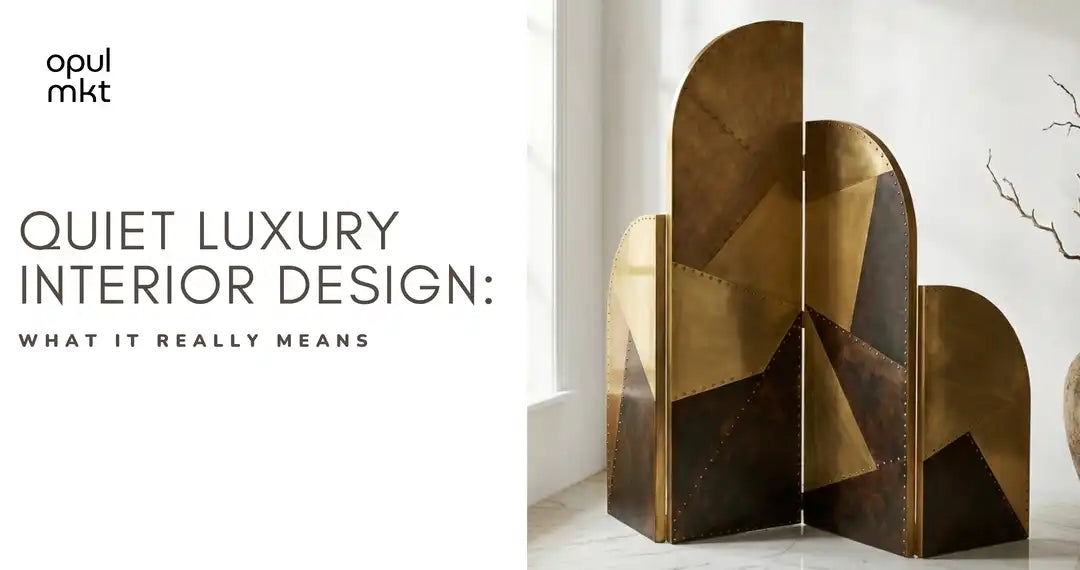
Quiet luxury has become the defining interior design philosophy of our time — but the phrase is in danger of meaning everything and therefore nothing. It gets applied to all-beige apartments and six-bedroom estates alike. Most of the time, it is a marketing convenience rather than a design position.
Here is the distinction that matters: quiet luxury is not about having less. It is about choosing better. That shift — from quantity to quality, from visual abundance to material intelligence — is where the real conversation begins. And it is where Opul Mkt adds genuine value for designers and architects working at the highest level.
Part I: Correcting the Myth
What Quiet Luxury Is Not
Many clients arrive with the wrong idea. They assume quiet luxury means empty rooms, minimal furniture, or plain design. These are common misconceptions that lead to misaligned briefs and disappointing results.
Common misconceptions about quiet luxury:
- Quiet luxury = empty spaces
- Quiet luxury = minimal furniture
- Quiet luxury = plain or neutral design
None of these are accurate. A quiet luxury room can contain a great deal: layers of texture, a thoughtful mix of old and new, significant amounts of furniture. What it does not contain is noise. Nothing is there by accident, and nothing competes.
The room is edited, not emptied.
The Right Definition
Quiet luxury is richness expressed through restraint. It is depth of materials, precision of craftsmanship, subtle texture layering, and refined proportions. The value moves inward — into the weight of a door handle, the grain of an oak panel, the way plaster catches afternoon light — rather than outward into visible gestures.
Quiet luxury isn't about removing objects — it's about selecting pieces whose materials and craftsmanship speak without excess.
Start with the pieces that define the room. In a quiet luxury interior, every selection earns its place. Explore our handcrafted sofas and sectionals, handwoven rugs, and designer lighting — each curated for material integrity and lasting character.
Part II: Quiet Luxury vs Minimalism
One of the most persistent misconceptions is that quiet luxury is simply minimalism rebranded. It is not — and the distinction matters practically when briefing a design team or advising a client.
How the Two Approaches Differ
- Minimalism reduces objects — Quiet Luxury refines selections
- Minimalism pursues visual simplicity — Quiet Luxury pursues material richness
- Minimalism is often affordability-driven — Quiet Luxury is craftsmanship-driven
- Minimalism seeks aesthetic restraint — Quiet Luxury seeks sensory depth
Minimalism is a formal position — a commitment to reduction and negative space as active compositional elements. Quiet luxury is not interested in absence. It is interested in depth. The palette is restrained; the material quality is not.
Part III: The Material Foundation
No discussion of quiet luxury is complete without addressing materials, because materials are where the philosophy lives or dies. Surface choices in a quiet luxury interior are not neutral backgrounds — they are the design itself.
Materials That Define Quiet Luxury
- Handwoven wool and silk rugs
- Honed marble and travertine
- Solid oak and walnut with oil or wax finishes — expressed beautifully in case goods and bedroom furniture
- Unlacquered brass and bronze — patina is the point
- Heavy linen, cotton velvet, and natural fibers
- Venetian plaster and limewash wall finishes
- Natural stone — limestone, slate, and marble with restrained veining
Why These Materials Matter
The consistent factor across all quiet luxury materials is that they age visibly and gain character over time, rather than simply showing wear. Unlacquered brass oxidises and develops a surface that cannot be purchased new. Limewash walls shift in tone as light moves through the day. Oak develops depth that sealed, polyurethane-finished alternatives never achieve.
This temporal quality — the way a material becomes more itself over time — is what separates genuine quiet luxury from its imitations. It is also what makes material sourcing the single most important decision in this design approach.
Material depth is what the camera — and the client — will remember. Anchor a room with handmade natural-fibre rugs, layer in artisan seating upholstered in natural textiles, and finish with sculptural objects that reward close attention.
Part IV: Applying Quiet Luxury Across Contexts
Most content on this topic stops at residential design. That is a missed opportunity. The principles of quiet luxury translate powerfully across multiple project types — and understanding the differences helps designers make better decisions for each.
Residential
Private homes demand livability. Quiet luxury creates calm, sophisticated spaces the client can genuinely inhabit — not display. The emphasis is on materials and finishes that improve with daily use, layered textures that reward sustained attention, and furniture proportions that feel settled rather than staged.
Hospitality
In hotels and boutique properties, quiet luxury creates sensory comfort and lasting impressions. Guests remember how a space made them feel — the weight of a throw, the warmth of stone underfoot, the quality of light in a suite. These are the details that drive loyalty and word-of-mouth at the highest level of hospitality.
- Spas: quiet luxury materials create genuine calm — stone, linen, natural plaster
- Boutique hotels: layered texture and warmth in suite environments
- Private dining: material richness without visual noise
Luxury Retail
In retail environments, quiet luxury signals exclusivity and premium positioning without the visual aggression of traditional luxury branding. Understated elegance communicates confidence. It says: we do not need to announce our quality, because the quality announces itself. Wall art and sculptural hangings anchor such spaces with authority and intention.
Are you a design professional?
Join the Opul Mkt Trade Program for exclusive trade pricing, early access to new collections, and personalised sourcing support.
Part V: The Sourcing Challenge — Where Opul Mkt Fits
Achieving quiet luxury requires more than restraint. It requires access to makers who understand material integrity and craftsmanship. This is where the philosophy becomes a practical sourcing problem — and where most designers encounter friction.
The Problem Designers Face
- Hard to source authentic materials at project scale
- Quality inconsistency across suppliers
- Limited customisation options from standard trade channels
- Difficulty finding makers who specialise in specific materials
- Time lost vetting suppliers for each new project
The Opul Mkt Solution
Opul Mkt connects designers to makers who specialise in the materials that define quiet luxury. Curated global sourcing means access to artisans who work with handwoven textiles, honed stone, natural plasters, and unlacquered metals — with material authenticity, customisable finishes, and production timelines that work for serious projects.
- Curated global makers — vetted for material quality and craftsmanship
- Material authenticity — natural, not synthetic alternatives
- Customisable finishes — tailored to project specifications
- Project-safe production — scale and timeline reliability
Achieving quiet luxury requires more than restraint — it requires access to makers who understand material integrity and craftsmanship. This is where curated sourcing becomes essential. Learn more about the Opul Mkt philosophy.
Part VI: Why Designers Choose This Approach
Beyond the aesthetic, quiet luxury delivers practical benefits that matter to designers and their clients over the long term.
- Timeless design longevity — spaces that do not date or require trend-driven replacement
- Fewer client interventions — quality materials age gracefully without becoming embarrassing
- Elevated client perception — the experience of the space improves over time
- Improved project photography — material depth reads powerfully in print and on screen
- Enduring material performance — natural materials outlast synthetic alternatives
The designer who specifies quiet luxury is making a long-term argument for their client: this space will be as considered in fifteen years as it is today. That is a powerful position to occupy, and it builds the kind of client trust that generates sustained referrals.
Build rooms that improve with time. Specify pieces with genuine material intelligence: solid-wood bedroom furniture that develops patina, handwoven rugs that soften beautifully underfoot, and artisan lighting that anchors a room for decades.
The Opul Mkt Position
Quiet luxury is not defined by absence. It is defined by material intelligence, craftsmanship, and restraint. The difference lies not in how little you include, but in how well each piece is chosen.
This is the standard Opul Mkt holds for every maker in our network. Not restraint for its own sake — but selection with genuine intention, backed by access to the global craftsmanship that makes it possible.
Quiet Luxury Begins With the Right Source Material intelligence, artisan craftsmanship, and curated restraint — available to designers and private clients through Opul Mkt's global network of makers.
→ Explore the Furniture Collection → Join the Trade Program → Our Sourcing Philosophy
Explore Designer Lighting | Shop Handmade Rugs | Browse Artisan Seating | Wall Art & Sculptures | About Opul Mkt


Leave a comment
This site is protected by hCaptcha and the hCaptcha Privacy Policy and Terms of Service apply.