
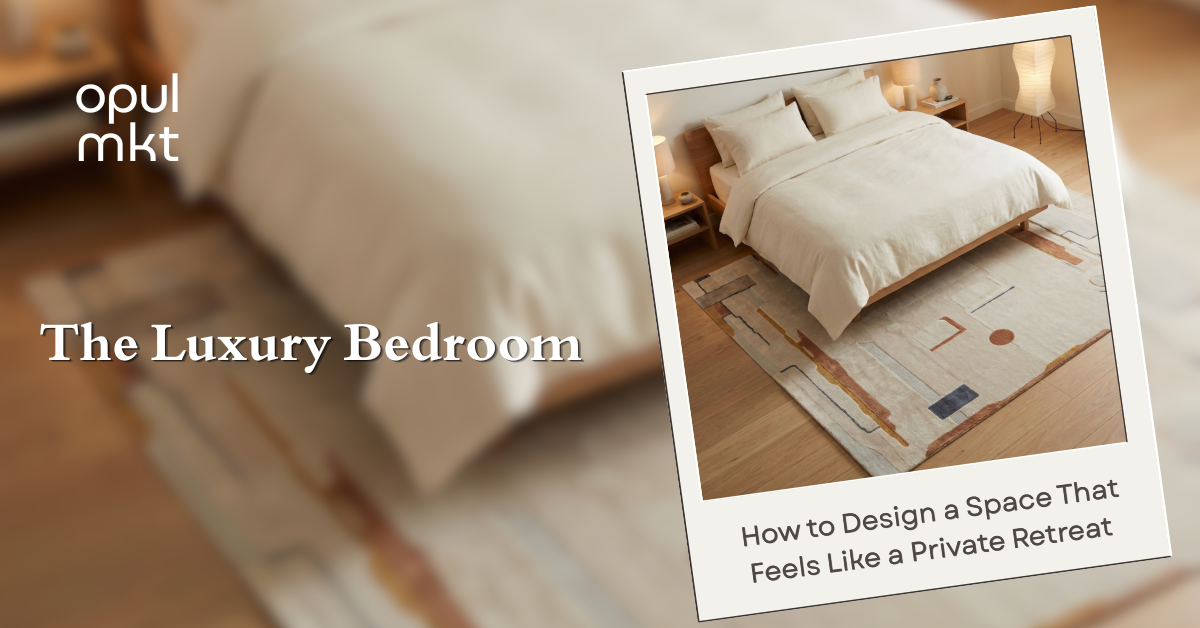
The bedroom is the most personal room in a home — the one designed entirely for the person who inhabits it. That freedom is also its design challenge. Without the external constraint of how a space will be read by others, the bedroom demands genuine clarity about what luxury actually means to its owner: not what looks expensive, but what produces the experience of sanctuary, comfort, and personal restoration.
This guide covers what actually matters in luxury bedroom design: the decisions that determine whether a space feels genuinely considered or merely finished. Not a checklist of expensive additions, but a framework for thinking about the bedroom as a designed experience — and for sourcing the elements that make that experience possible.
Part I: The Foundation — Bed, Bedding, and the Sleep Environment
 Everything in a luxury bedroom resolves around the quality of the sleep environment. This is not a minor consideration to address after the visual design is settled — it is the primary brief. A bedroom that looks extraordinary but does not produce genuine rest has failed at its most important task.
The Bed: Start with the Frame
The bed is the architectural anchor of the bedroom — the piece that determines proportion, sets the tonal register, and establishes the room's design identity. Every other sourcing decision should follow from it.
An upholstered headboard in a material with genuine depth — heavyweight linen, natural wool, leather that develops character with age — communicates a different quality of intention than a headboard chosen for visual impact at the expense of material integrity. The choice of bed frame also determines the room's scale relationship: an oversized headboard in a room with generous ceiling height creates a sense of contained grandeur that a lower platform bed in the same room cannot.
Explore beds and frames at Opul Mkt to find the right proportion for your project — pieces in solid hardwood and quality upholstery with the architectural authority that anchors a luxury bedroom.
Bedding: The Detail That Guests Notice Most
In residential design, high-quality bedding is the single easiest intervention with the highest impact on experienced luxury. Egyptian cotton, long-staple linen, and silk blends at meaningful thread counts produce a tactile experience that communicates material quality directly and immediately.
For designers specifying a bedroom at the luxury level, bedding is not a procurement afterthought. The weight of the duvet, the texture of the top sheet, the hand-feel of the pillowcases — these are experienced every night by the client. Their quality or inadequacy is felt more consistently than almost any other design decision in the room.
- Egyptian cotton or long-staple linen for sheets — minimum 400 thread count, preferably percale weave
- Duvet weight matched to the client's thermal preference — not a standard specification
- Coordinated but not matchy-matchy bedding layers — fitted sheet, top sheet, duvet, throws, and cushions each contributing distinct texture
- Natural fibre pillows and cushion covers that invite touch rather than simply completing a visual arrangement
The Rug: Texture Underfoot as the First Sensory Experience
The first sensory experience of the bedroom every morning is stepping out of bed. A rug that delivers genuine material quality at that moment — the warmth and give of a handwoven wool pile, the natural variation of a hand-knotted textile — sets the tone for the entire room experience in a way that no visual element can replicate.
The rug is typically the largest single textile surface in the bedroom and the one with the greatest impact on acoustic and thermal comfort.
- Handwoven wool or wool-silk blend for maximum pile depth and natural warmth
- Size generously — a rug that extends significantly beyond the bed on three sides grounds the room properly
- Natural variation in tone and weave is a quality marker, not a defect
- Lay the rug before finalising other material decisions — it sets the tonal register for everything above it
Browse handwoven rugs at Opul Mkt — each piece sourced from artisan makers with genuine craft depth, in natural fibres that perform better with every year of use.
Part II: Lighting — The Element Most Designers Get Wrong
 Lighting is the single most underinvested element in luxury bedroom design, and the one with the greatest impact on how the room is actually experienced. The difference between a bedroom that feels genuinely luxurious and one that looks expensive in photographs is almost always the quality and controllability of the light.
Layers, Not Sources
A luxury bedroom is never lit from a single source. The brief is always layered — and each layer must be independently controllable.
Fills the room without casting shadows. A statement ceiling fixture on a dimmer. Never the sole source.
Bedside lamps or wall sconces for reading and dressing. Adjustable, independent, at shoulder height when seated.
Cove lighting, niche lighting, low-level navigation light. Creates intrinsic warmth — not added to the room but part of it.
The most common failure in bedroom lighting is over-relying on a single ceiling fixture, however spectacular, to serve all three functions. A dramatic chandelier that provides good general illumination but poor task light forces the occupant to choose between atmosphere and function. Neither is acceptable in a luxury bedroom.
The Statement Fixture: Purpose Before Drama
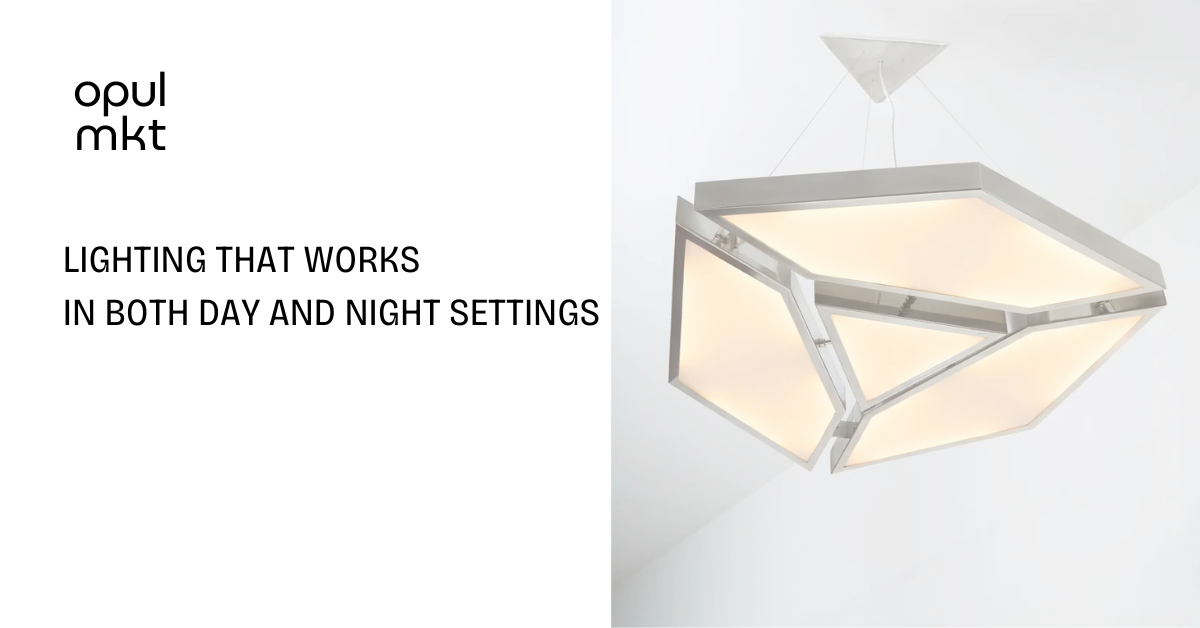
A statement ceiling fixture — chandelier, sculptural pendant, or architectural installation — is appropriate in a luxury bedroom when it serves the ambient function well and contributes to the room's design narrative. It should reflect the room's dominant material language: a sculptural blown-glass piece in a room built on organic materials, a brass and linen shade in a warmer, more traditional register.
Explore curated lighting at Opul Mkt — fixtures designed for residential scale and warmth, in natural materials that read as design objects in daylight and produce genuine atmosphere in the evening.
Bedside Lighting: The Most Used Light in the Room
Bedside lamps or wall-mounted reading lights are used most consistently in a bedroom — every morning and every evening. Their quality, adjustability, and aesthetic integration deserve proportionate investment.
- Height matters — the light source should be at approximately shoulder height when sitting in bed
- Directional task light rather than diffuse ambient glow for reading
- Dimmer control as standard — not an optional upgrade
- Matching but not identical pairs — visual cohesion without the sterility of exact duplication
Concealed and Architectural Light
The most sophisticated bedroom lighting is often the least visible. Cove lighting behind architectural elements, integrated shelf or niche lighting, low-level floor lighting for nighttime navigation — these elements add layers of warmth and depth that visible fixtures alone cannot produce. At their best, these concealed elements make the quality of light feel intrinsic to the architecture rather than added to it, which is the mark of genuinely considered lighting design.
Part III: Furniture — Selection, Not Collection
 The furniture brief for a luxury bedroom is strict in one respect: every piece must earn its place. A bedroom that accumulates furniture — a chair because chairs belong in bedrooms, an ottoman because ottomans look luxurious, a console because the wall needed something — quickly becomes a room that feels furnished rather than designed.
Where the most significant design expression is possible. A custom-made headboard, sized specifically for the room's proportions, communicates a level of intention that off-the-shelf alternatives cannot replicate. Explore beds →
Experienced in intimate proximity every day. Identical pairs create formal symmetry. Complementary but non-identical pairs introduce a more personal, collected quality. Explore side tables →
One well-chosen chair or chaise — genuinely comfortable to sit in, not merely beautiful to look at. The element with the most latitude for design expression: a material, finish, or colour that does not appear elsewhere in the room. Explore upholstered seating →
Designed in, not added on. Built-in wardrobes as architectural elements; freestanding storage in a material that responds to the room's broader palette — solid timber with an honest finish, or a lacquered case piece that holds the room's colour register.
"A bedroom that accumulates furniture quickly becomes a room that feels furnished rather than designed."
When sourcing the seating piece, prioritise makers who work with natural upholstery materials — wool, linen, leather — over synthetic alternatives that look similar but feel fundamentally different to sit in. Explore upholstered furniture at Opul Mkt for pieces designed with material integrity.
Part IV: Material and Colour — The Decisions That Determine Everything Else
 The material and colour decisions in a luxury bedroom are more consequential than in any other room in a home for a specific reason: the bedroom is experienced in conditions of extreme sensory sensitivity — in the quiet of early morning, in the particular quality of evening light, in the physical proximity of the bed itself. Materials and colours that work well in a living room may feel wrong in a bedroom, because the bedroom's sensory conditions are different.
The Palette: Warmth Without Weight
Luxury bedroom palettes almost universally tend toward warmth — not because warm colours are inherently more luxurious, but because warm tones produce the physiological conditions that support rest. The nervous system responds differently to warm ochres, deep taupes, and saturated earthy tones than to cool whites and sharp contrasts.
This does not mean every luxury bedroom is neutral. Dark, saturated bedrooms in deep forest greens, midnight blues, or rich terracottas can be extraordinarily effective — they create a quality of enclosure and depth that warm neutrals cannot achieve. The principle is warmth over coolness, not light over dark.
- Warm neutrals as the base: stone, linen, aged white, deep cream, warm grey
- One or two accent tones — not more — introduced through textiles and secondary surfaces
- Dark saturated options for bedrooms where enclosure and depth are the design intention
- Metal finishes as colour elements — warm brass and bronze rather than cool chrome and nickel
Texture as the Primary Design Tool
In a bedroom where the colour palette is often deliberately restrained, texture carries the visual and tactile weight of the entire design. A bedroom built on a tonal neutral palette becomes genuinely luxurious only when the surfaces within that palette have real material depth — the grain of oiled oak, the pile variation of a handwoven rug, the subtle sheen difference between a linen pillow and a wool throw.
Without that textural depth, a restrained palette produces a flat, sterile result rather than a refined one. The material quality of each surface determines whether the room reads as sophisticated restraint or simply as underinvestment.
Natural Materials as the Default
The argument for natural materials in the bedroom is partly aesthetic and partly physiological. Natural materials — linen, wool, stone, untreated timber, cotton — regulate temperature, develop character over time, and engage the senses in ways that synthetic alternatives cannot. In a space designed for rest and restoration, these qualities are not minor refinements — they are fundamental to the room's performance.
Explore natural material textiles at Opul Mkt — linen, wool, and natural fibre pieces that perform better with time and age into quality rather than deteriorating from it.
Part V: The Details — Art, Mirrors, Objects, and Finishing Layers
 The difference between a luxury bedroom that feels resolved and one that merely feels expensive is almost always in the finishing layers. The art, the objects, the mirrors, the small decisions that communicate whether the space was designed with genuine intention or assembled from a list of luxury-adjacent items.
Art in the Bedroom
Art in the bedroom occupies a different role than art in public spaces. It does not need to perform — to be immediately legible or to signal taste to visitors. Bedroom art can be intimate, personal, and quiet in a way that living room or dining room art cannot.
The most effective bedroom art is often the piece with the deepest personal resonance rather than the most obvious visual impact. A single work above the bed — well-scaled, well-lit, positioned with care — communicates more about the room's design intention than a gallery arrangement that performs sophistication without achieving it.
Opul Mkt's curated art collection includes work from independent artists and studios selected for material quality and design integrity — pieces that earn their place in a bedroom through genuine resonance rather than decorative utility.
Mirrors: Function, Light, and Scale
A well-positioned mirror in a luxury bedroom serves three simultaneous functions: it reflects and amplifies natural light, it creates a sense of depth and spatial expansion, and — when chosen carefully — it adds a significant design element in its own right.
The most common mistake with mirrors in bedrooms is undersizing. A mirror too small for its wall reads as tentative and decorative rather than resolved and functional. In luxury bedroom design, mirrors are typically designed at architectural scale — tall, wide, and positioned to genuinely transform the room's quality of light. The frame is a material decision of equal importance to the mirror itself.
Browse statement mirrors at Opul Mkt — from sculptural frames in natural materials to large-format architectural pieces sized to genuinely transform the bedroom's quality of light.
Objects and Accessories: Collected, Not Curated
The objects that inhabit a luxury bedroom — on the bedside table, on the dressing table, on a shelf or console — should feel like they have been gathered over time rather than procured for the room. Specify fewer objects, each chosen with genuine intention: a single piece of sculptural pottery, a tray in a material that responds to the room's metal finish, a vase scaled correctly for its surface. Objects that look like they belong to the room's owner rather than to the design scheme.
Restraint in object selection is the mark of genuine luxury design: not how many pieces, but how well each is chosen.
Explore curated décor objects at Opul Mkt — pieces with the material quality and design character that makes restraint possible.
Window Treatment: The Detail That Sets the Mood
Curtains and blinds in a luxury bedroom serve both functional and atmospheric purposes. The functional brief: blackout capability for genuine darkness, acoustic softening, and thermal insulation. The atmospheric brief: the quality of light that enters the room, filtered through linen or silk, produces an entirely different morning experience than light filtered through synthetic alternatives.
Full-length curtains in a natural fabric — unlined linen, silk, or heavyweight cotton — that puddle slightly on the floor communicate a quality of considered luxury that shorter, tighter treatments cannot. They also soften the acoustic quality of the room in a way that blind treatments alone do not.
Part VI: Room Type Considerations
The luxury bedroom brief shifts significantly depending on project context. The same design principles apply across all types, but the specific priorities and constraints are different.
The Primary Bedroom
The primary bedroom is designed for one person or two who know the space intimately. This familiarity means it can support greater personal specificity than any other room — more personal art, more individual material choices, a tighter calibration to the specific sensory preferences of its occupants.
The designer has the latitude to make decisions that would be too personal for a guest room: a very specific colour, an unusual textile, a piece of art with deep personal meaning. These decisions are precisely what make a primary bedroom feel like a genuine sanctuary rather than a luxury hotel suite.
The Guest Bedroom
The guest bedroom has a different brief: not personal specificity but universal welcome. The design should communicate warmth and consideration without the personal idiosyncrasy that is appropriate in a primary bedroom. Material quality is, if anything, more important here — guests register the quality of bedding, towels, and room comfort immediately and directly.
The guest bedroom is where investment in genuinely excellent bedding and natural textiles pays the most visible dividend — because guests notice the difference between a well-considered guest room and an afterthought more clearly than the primary bedroom's occupants notice their own room's quality.
The Hospitality Suite
In boutique hotel and high-end hospitality contexts, the luxury bedroom brief combines the warmth of residential design with the performance demands of a commercial environment. The materials must meet commercial durability standards; the experience must feel residential in quality.
This is the context where material authenticity is most demanding — and where the sourcing challenge is most significant. Textiles that feel genuinely residential, stone surfaces with natural variation, lighting at domestic scale — these require specialist makers rather than standard hospitality trade suppliers. Opul Mkt's network of global makers is built specifically for this overlap: residential quality material at hospitality production scale.
The Opul Mkt Position on Luxury Bedroom Design
A luxury bedroom is not defined by how much it contains or how expensive its elements are. It is defined by how accurately it reflects its occupant's sense of what comfort, rest, and personal sanctuary mean — and by how well the materials and craft of every element support that experience over time.
That quality of design requires access to makers who understand material integrity: the difference between a rug that feels luxurious and one that looks luxurious, between lighting that produces warmth and lighting that performs it, between a bed frame that communicates craft and one that communicates price. Opul Mkt curates that access.
Planning a Luxury Bedroom Project?
Use this as a briefing framework with clients at the start of a bedroom project — to establish shared priorities and ground the design conversation in material quality.
Share with clients designing or renovating a primary or guest bedroom.


Leave a comment
This site is protected by hCaptcha and the hCaptcha Privacy Policy and Terms of Service apply.